
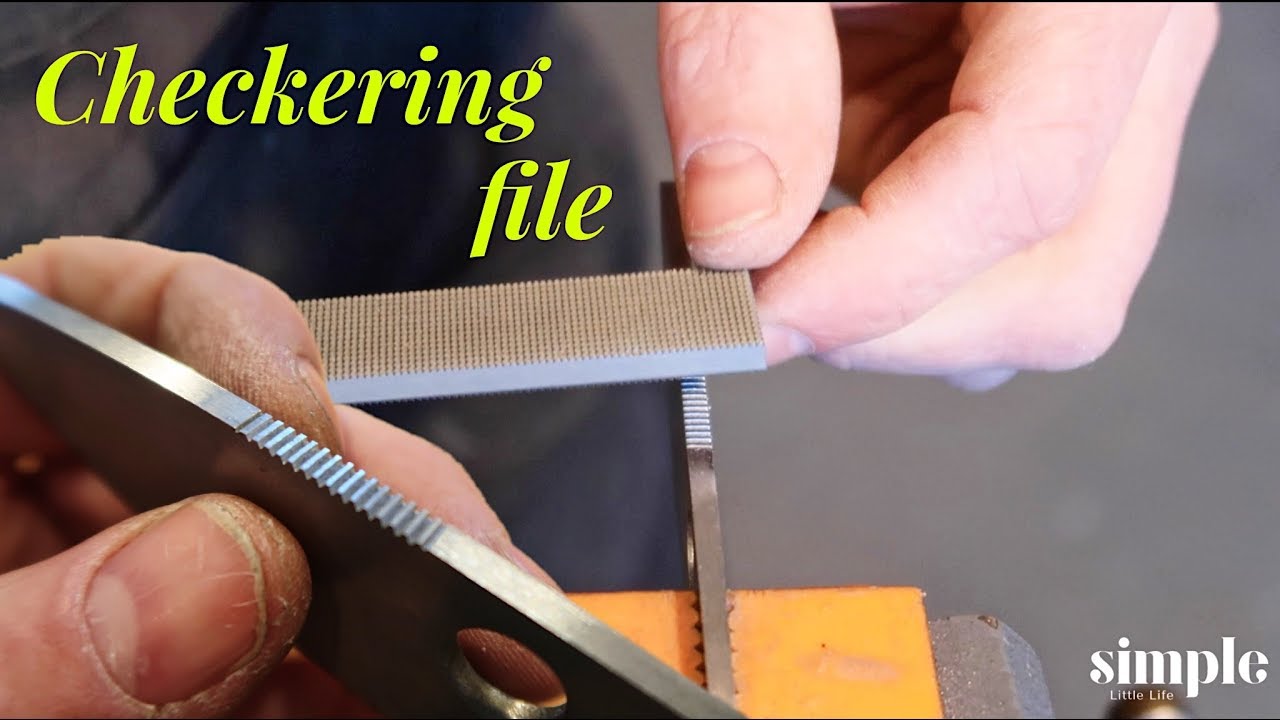
How To Use A Checkering File
Tool Time Tuesday Checkering File A Great Tool For Knife Making Knife Making Things To Sell Knife

Joalheria Navajo Teaching Jewelry Jewelry Tutorials Jewelry Tools

Pin On Techniques


Uxcell Red Plastic Grip Metal Shank Checkering Needle Files Woodworking Tool 10 Piece 140mm Long You Can Get Even M Woodworking Tools Needle File Woodworking

Gunsmithing Tools Woodworking Gunsmithing
Like by taking it to the grinder and thinning it out maybe.
How to use a checkering file. In the next window make sure you have PNG selected from the drop-down list of formats and then click Save First click on the picture that you want to remove the background from. CT0902 Dem Bart Checkering Tool - 60 Degree V. You should mark the sides of the file with a Sharpie as you will ALWAYS want to use the same side of the file for all of your work.
Because of the arrangement of teeth checkering files sometimes referred to as texturing or Florentine files create grooves or serrations in the material being filed. After pencil tracing use a sharp grease pencil to darken the lines. MAKE SURE that the file you are using has the teeth lined up straight to the edge of the file.
In this video Kurt shows you how to lay out your border lines and your master lines. Then again using a regular checkering file would probably keep the lines straighter. They are often used to create decorative edges on bezels broad textured surfaces and fast material.
Though they seem to be out of stock currently. Easier to use for the less experienced user also. This will keep the lines evenly spaced and consistent.
Almost all sources I have read say that the first step to perform is a horizontal line at the top of the frontstrap where vertical lines will stop then file the vertical lines at about half depth using a jig to guide the file straight then start with the horizontals using a different jig. Im thinking a thin hacksaw blade might work. As far as coining goes I wonder if you would even use a file.
Overcut is parallel to file edges and upcut is 90 degrees to overcut. Trace the lines through tracing paper with a ponce wheel or with a sharp pencil. Parallel in width and gently tapered in thickness.

Pin On Files 178974

Pin On Products

Pin On Miniaturetools Made By Paul Hamler

13 Pack Wood Carving Kit 12pcs Wood Carving Tools Sk2 Carbon Steel 1pcs Whetstonesa For Rubber Small Pumpkin Wood Carving Tools Carving Tools Small Pumpkins

Akhavan Insolence The Gemology Project Diagram Design Jewel Drawing Diagram

Rotary Jig Software Tutorial Using 3d Modeling Tools 3d Model Jig Layout

Pin On Armas Caseiras

Pin On Files 178974

Pin On Files 178974

Pin On The Kalashnikov Kollection


Pin On Metalworking Tools

Pin On Files 178974
